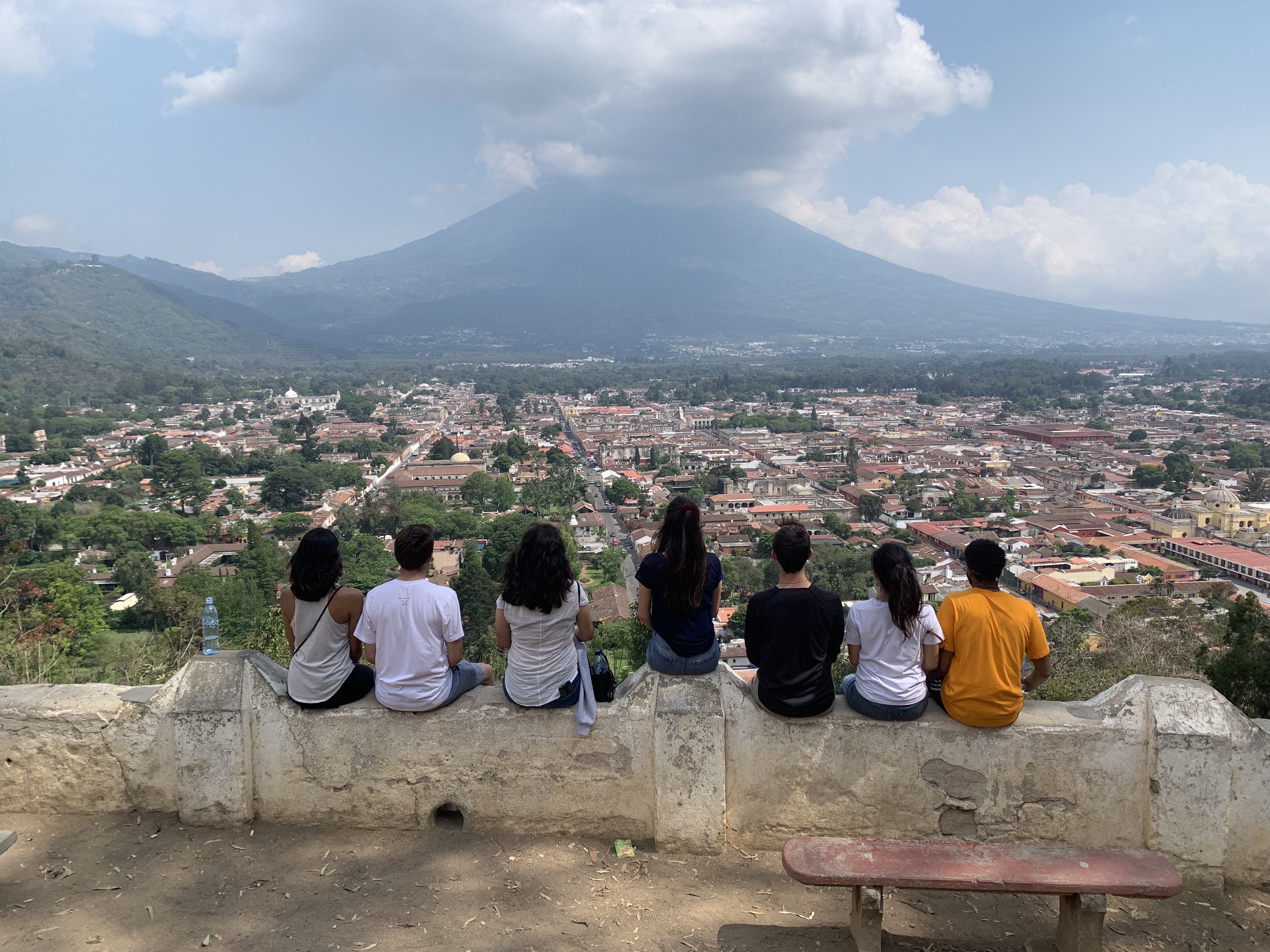
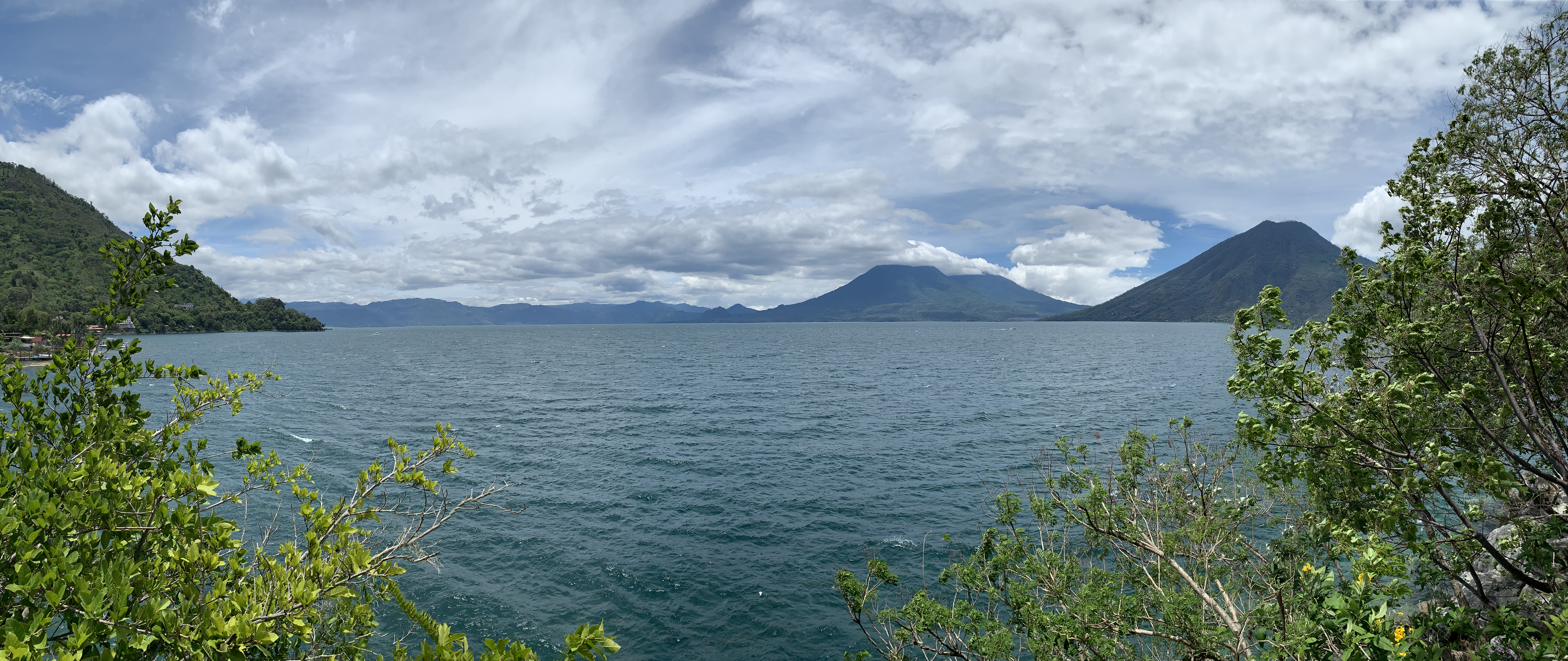
Antigua, Guatemala with Volcán de Agua in the distance.
We left Xela today. I have mixed feelings about it.
On the one hand I’m happy to be heading home, but on the
other I was starting to feel a lot more comfortable interacting with people in
Xela and if I had to describe my time there in one word, it would be
unfinished. I was able to experience a lot of new things there and I learned a
lot about the language, history, and culture of Guatemala, but was I was also
able to learn a lot about myself.
We are now in Antigua and it’s a bit of a shock. The amount
of English that I have heard just walking down the street to have lunch is more
than I heard for three and a half weeks in Xela. We climbed to an overlook and I
was struck by the linearity of all the streets, in stark contrast to the crooked
and narrow streets of Xela.
My time here has been a once-in-a-lifetime experience and I
will cherish these memories and friends forever. We have one more day before
the majority of us head out Saturday morning. I hope to make the most of it.
The presentations today were really interesting, although I
think they took longer than any of us thought. It was really interesting to hear
about the role of the civil war first as everything built off of it. Being able
to learn more about the education system was really important to me when I was
preparing to come to Guatemala as I am a firm believer that lasting change
starts by educating the next generations.
Being able to hear my from peers and seeing how much each and
every one of them cares about what they did research on made me proud to be
among them. It isn’t easy to look at a problem, find it’s causes, and formulate
a solution, especially coming from an outside perspective. I think we did a
good job, though, and I think we all have a better idea of not only what we
want to do in the future but also a much better understanding of why we want to
do it. I know I do.
This past weekend, most of our group decided to climb Volcán Tajumulco. At 13,845 feet,
TJ is the tallest peak in Central America.
We left bright and early Saturday morning and drove for a
few hours to get to the base of the mountain. When we got there, it was
incredibly cloudy and windy, and the guides informed us that it was the worst
weather they had so far experienced on TJ but that we would climb nonetheless. I
had checked the weather several times before we set out on the trip and new the
weather wouldn’t be in our favor but s we climbed things started to clear up. When
we finally got to basecamp, only 200 meters below the peak, after three and half
hours, the clouds had started to come back but it wasn’t until immediately
after the tents were set up that the weather really started to turn.
It rained hard and the wind roared by for hours before there
was finally a break long enough for us to have a comfortable dinner. It didn’t
long though for the weather to come back with a vengeance and it did not let up
until the morning. Unfortunately, this caused us to miss our window to summit
for the sunrise, but we found an opportunity to finish the climb a few hours
later. Standing on top of Central America, I was a little disappointed to be shrouded
in mist but we all had a feeling of accomplishment that made it worth it.
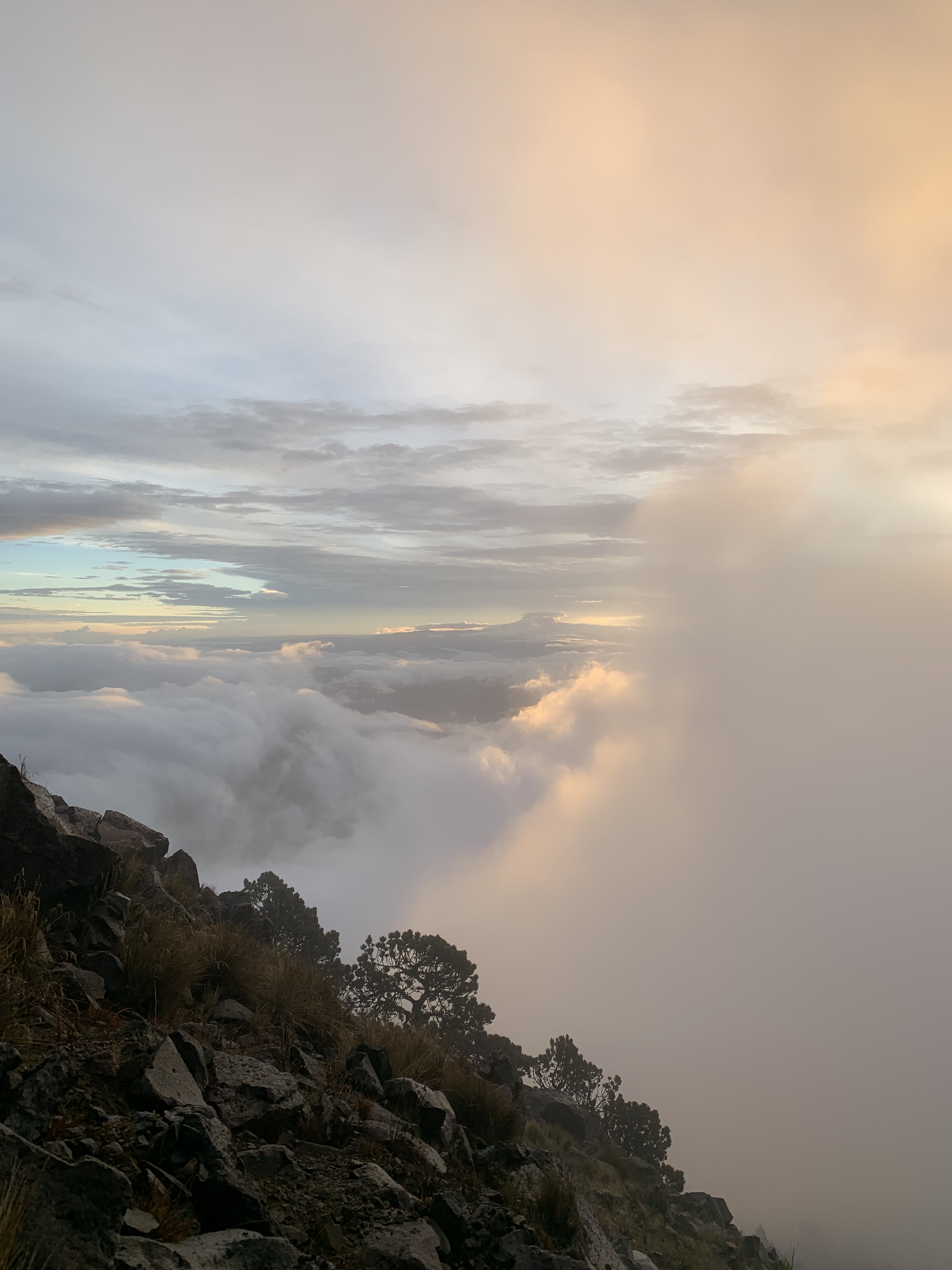
A break in the clouds on the way to the summit of Tajumulco.
On the way down, the weather started out fine enough, but we
found ourselves back in the clouds and the wind. Not too long into the descent,
it began to rain. Then it began to rain harder. Then there was a flash of light
and a crack of thunder. Then we were slipping down the mountain in rivers of
mud as lightning flashed overhead and rain soaked through our waterproof
jackets and hail bit at our exposed areas of skin. When we finally made it back
to the base of the mountain, we went to a nearby comedor. I felt bad when,
after we had finished eating, I looked down and noticed that we were all
sitting in puddles of our own making from our drenched clothes.
It was a three hour bus ride in sopping clothes and a heater
on too high before we made it back to Xela. We were tired, smelly, and
miserable. But we were happy all the same. Afterall, misery loves company.
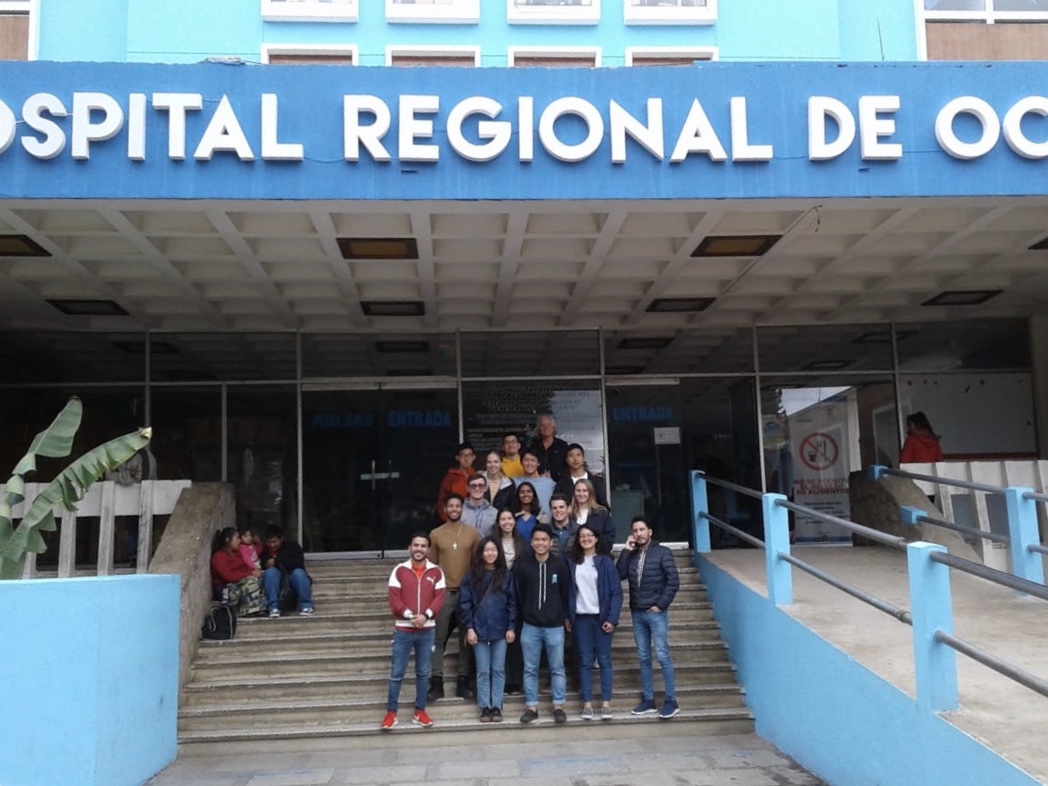
Yesterday and today we were able to visit more healthcare
centers. The first, a clinic run by an NGO, shared with us some of the programs
they provide just beyond health care as there are so many aspects to health than
just medicine. My favorite example was how they were trying to combat malnourishment
by using meal worm farms to provide a sustainable and cost-effective source of
protein. I really like it because it is type of creative solution that is
needed in these situations.
The general hospital was a different kind of surprise as had
just as many beds as LA County hospital but their distribution per room meant
that the actual size of the hospital was much smaller.
From these visits, I have begun to realize that Western
Medicine doesn’t translate well into low resource environments, not just
because there is limited access to certain tools, but because there are larger
issues that Western practitioners aren’t used to facing and that prevent some
tools from being able to be used properly.
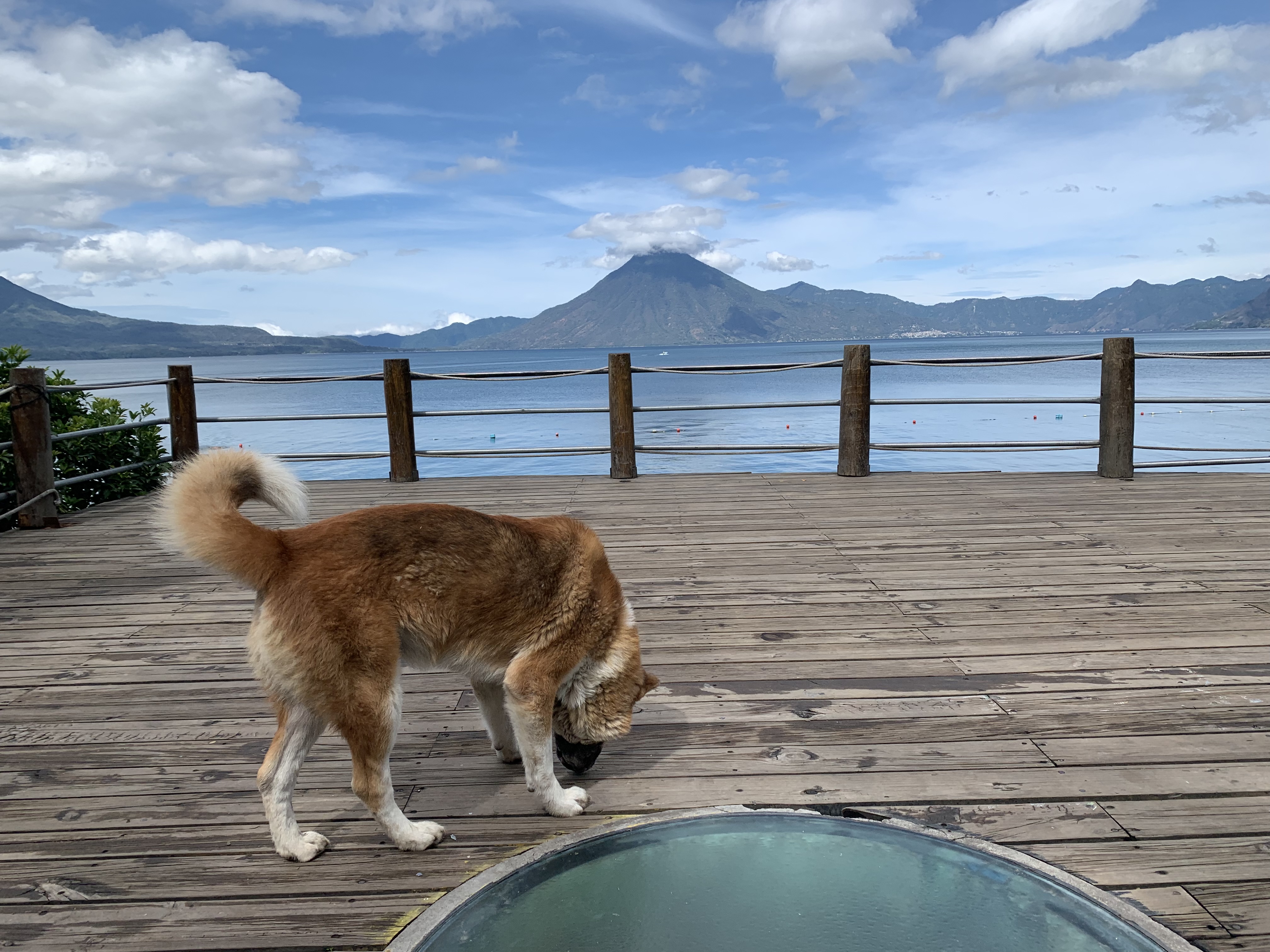
Yesterday we kayaked before leaving the lake. It was a beautiful
day out and it was nice to be gliding through the water with the sun beating
down.
Hearing from Teresa, a woman who went to the United States
illegally 20 years ago, was nothing short than terrifying. Her harrowing
journey to the United Sates robbed her of the dignity any human being deserves.
It truly makes you think about what we have in the United States and what we
take for granted. If someone is willing to cross rough terrain with minimal
supplies for a chance, not even a guarantee, they must be to trying leave some
place at least as much as they are trying to go somewhere.
The rhetoric of the current United States government is very
anti-immigrant. Our nation’s leaders should really sit down with some of these
people and hear their stories. It isn’t enough to hear from someone other than
the person who experienced, nor is it right to generalize this population of
people. Each has their own story and they should all be heard.
My time in Panajachel has so far been amazing. Our trip here
involved a stop at a traditional Mayan healer. Here, we were able to learn
about the role of the healer how people in Mayan communities don’t choose to be
healers, they are chosen. We were then all told our nawales which correspond to
the day of the Mayan calendar when we were born. This represents the energy of
the universe at our birth and is representative of our lives. It was shocking
for each of us to hear just how accurate they all were.
The next day we were able to visit a hospital a hospital and
I was happy to learn about the way they functioned in the community. It was
nice to hear that not only did they provide health care, they only charged a
person the amount they could pay. They also provided education to the
communities they served on how to be healthier. This is an aspect of medicine
that is sometimes lost but education is one of the most important aspects to a fully
functioning health care system. My favorite part of the tour was learning that there
are several members on staff who speak Mayan languages in the event that a
patient does not speak Spanish. This is especially important for the particular
community the hospital serves as it is predominantly indigenous.
Today we got to meet more weavers and I was absolutely blown
away by the totality of the process as well as the collective they were able to
build. Thankfully I was able to buy all my gifts in one spot.
We then got to go swimming in the lake and ziplining through
the forest. After two weeks in Xela, it’s certainly a change, feeling like a
tourist.
A comadrona is a Mayan midwife. They are the most common
type of birth attendants in rural communities. They learn through
apprenticeship and experience and recognize several traditions to help bring
new life into the world.
One of the things that I was able to realize is that all of
the herbs and techniques aren’t simply a tool to aid in the process of
delivering a child, but that they are an actual demonstration of the history of
these people and the years and years of shared knowledge that has come together
in this exact moment. It is a fascinating realization when considering the
cultural aspects of comadronas.
It was humbling to hear, however, that one of the most
important things a comadrona can learn is when it is time to go to the
hospital. Knowing one’s own limits is something we should all strive for and I
am happy to know that people so involved in the lives of the next generation
appreciate its importance.
After a week of Spanish classes, I’m feeling confident that
I can grasp the big picture of a sentence while maybe missing some of the
nuances. After our lectures from Dr. Fredy Salanic on the Guatemalan healthcare
system and the role of traditional Mayan medicine, I now have a better picture
of just how much more I have to learn.
Thankfully there were pauses to translate some of the more
complex topics as I started to notice not only how many words I was missing,
but how many I was misinterpreting entirely by not having enough context. What
I was able to learn, however, is that the Guatemalan healthcare system has a
lot of holes in it and that the funding that is supposed to be used for it is
being allocated inappropriately. As a result, the people are paying vast sums
of money for the care they need and are suffering in other ways because of it.
The second part of the lecture today focused on Mayan medicine.
The most interesting part for me was learning that Mayan medicine is more than
just treating ailments, but how it is an expression of Mayan culture and faith.
There were certainly some aspects that modern medicine would deem useless or
even harmful, but there are also some aspects that are equal or more effective
than their western counterparts. I look forward to hearing from the comadrona
on Wednesday to learn more.
The hike to Laguna de Chicabal was refreshing. I had been
itching for some fresh air the last couple days and was excited to be hiking
again. Unfortunately for us the weather was not in our favor when we reached
the top and we couldn’t see down into the lake. When we started the climb down
to the lake, we passed by several out of breath children and every single one
of them was smiling and waved or said hello.
Finally reaching the lake was truly an incredible sight as
the clouds that shrouded the mountain began to fade and the lake waxed into
existence. It was easy to understand why Laguna de Chicabal is a sacred place
and we could several families praying on its shores.
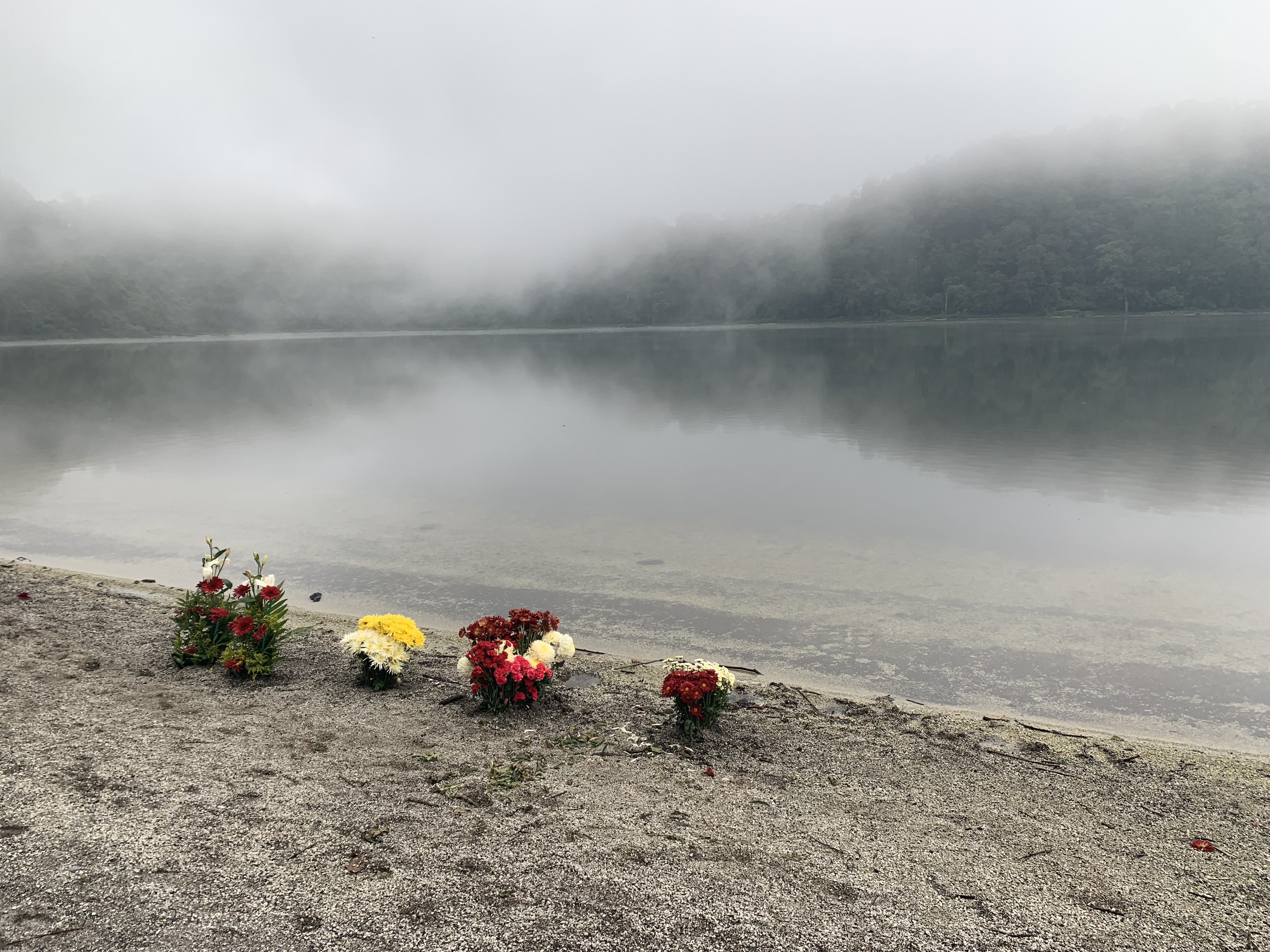
An offering at Laguna de Chicabal.
The most moving part of the trip was when we found a young man
who was preparing to leave for the United States tomorrow. His family was also
there to pray for his safe travels and good fortune in the land of opportunity and
it was humbling to see him interacting with his young children. It was
impossible to tell if the children knew the gravity of the situation, but it
also didn’t seem to matter as they enjoyed being with their father in this
sacred place. He said he was headed for Los Angeles, which is about a three-week
journey. We head home in three weeks. I hope he makes it.
After a few days in Xela I have started to get my bearings. It’s
been a lot of fun so far getting to know everyone and finding my way around the
city. Luckily, we were able to have a walk around the city as a group yesterday
but all that really did was make me realize how large the city truly is; the zone
where we live and go to classes in is actually pretty small. I like it though,
I prefer being able to walk everywhere and it’s a much more interesting experience
to see, hear, and smell everything that is going on around you.
I’ve been really excited to learn more about the history of
Guatemala, especially the civil war. We watched When the Mountain Trembles today and it talked a lot about the war
and how it started. The most surprising thing about it to me was how involved
the United States was in the war by providing money to the militant regime. This
was not something that I had learned about in previous history classes about
the United States or the world; the fact that I only learned about our messy
involvement now, as a senior in college, is something that truly saddened me.
History books tend to avoid the failures and mistakes of the
countries who write them. An unfortunate truth about history is that is written
by the winners. This creates a situation where the truth can be distorted or
lost, especially when it concerns a powerful country writing about a powerless
one. This approach to history is undoubtedly problematic, but it is a problem
that is only perpetuated when children are taught incomplete facts about the
world. It is a process that creates narrow-minded and unicentric point of view.
I hope to not fall victim to this.
 Nick in Guatemala